Showing posts with label life lessons. Show all posts

Sunday, 20 October 2019

The Pill version

For the pill version I wanted to explore the perspective of the bride/umakoti. The reason why I chose to use pills is that they usually represent some sort of relief from pain and felt that it would be an interesting concept to play around with as she too is seeking relief. 
Figure 1: Ndongeni, S (2019). Pill version, earrings and pendant. 

I had therefore decide to use actual pills which were then set inside these wire elements, which could also be an indicator of how she feels void of what she is meant to have and the only solution she is able to find inside her is ending her life. I tried to romanticize the idea of suicide with these pieces as I wanted to give the idea that she is drawn into this belief that the afterlife will give her peace; hence the silver. 

Fold formed version

For the Silver part of the series, I have tried to play around with the idea that a woman is flowering during the course of her pregnancy and have expressed this through the use of fold formed leaves. I then decided to place the leaves in a bead shape as though to imitate the uterus shape of female anatomy as seen in an earlier post. 

Figure 1: Ndongeni, S (2019). Miscarriage Series, fold-formed pendants.
The I also decided have settings hang at the bottom of the piece so as to signify this unborn life which is eternally tied to that of it’s mother, forever forming part of her life. I tried not to I will be setting a pear-shaped Quart in the setting seen on the left in figure one and a piece of red shwe-shwe in the piece on the right. These are meant to signify the life lost, while the red beadwork to be attached to the jumprings instead of a chain will signify the umbilical cord, while also an idea adopted from Xhosa beadwork. 

Thursday, 19 September 2019

How does she deal with them?


Figure 25 Stutman, B. (1996) How to Become a Woman Parts 1-3 Brooches. [ONLINE]

The picture above, is from the four part series entitled, “Negotiating Identity”.  It is a three set made from fine silver, copper, nickel silver and polyurethane. In this series, she uses her work as a vehicle to narrate the negative ways in which mass media distorts women through ongoing processes. She once again uses her jewellery to show how women can be influenced to become whatever the media tries to paint them to become.

The piece is entitled “How to Become a Woman, Parts 1-3”.  She is in a way mocking how the identity of the woman has been formed both traditionally and by media. In order to guide her audience she has relied not just on the imagery, but the titles of both the series and the pieces as an aid.


Which Issues does she address in her work?


Stutman tries to use her body of work as a vehicle which transports feminine concerns which are either swept under carpet and are not given a nondiscriminatory platform for conversation or consideration. Some of these concerns relating to the female gender that she deals with in her work are about incest, rape and even something as superficial as plastic surgery.
  1. Impaired visions series
Being the candid female narrative jewellery advocate that she is, Stutman tries to liberate the female concept from traditional shackles and stereotypical metaphors which have been placed on females even by the media. In order to provide reference, this report will only include one of her works from the five part series.
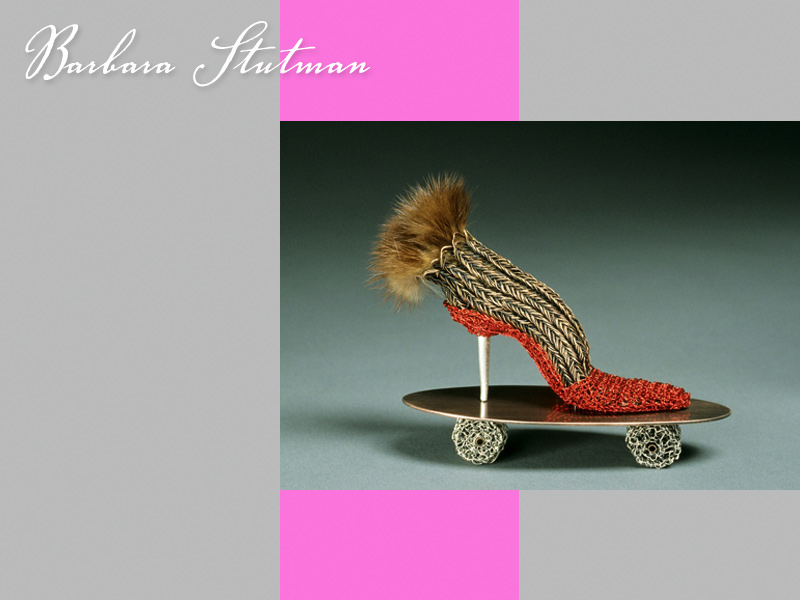
Stutman, B.1999. Survival of the Footest 1. [ONLINE] [1]

In the series “Impaired Visions”, she uses her craft to mock how the female is portrayed by media and shows how they try to create these unattainable fantasies which work on women’s insecurities in order to increase sales. She explains how these false ideologies are both damaging to a woman and limit her to conform (Stutman, 1997).


Friday, 26 July 2019

The rope version

Figure 1: Ndongeni, S (2018). Suicide by Rope neckpiece.
For this version of the series, I had made several neckpieces which as stated were created from actual rope, which were then tried as a noose to be worn around the neck.

Figure 2: Ndongeni, S (2018). Suicide by Rope neckpiece.

In order to tie the poetry and the actual pieces, I had decided to use flowery image once again, as it would depict this young flower (a girl), which never got to bloom into the woman she was meant to become.
Figure3: Ndongeni, S. Suicide by rope type 2. 

In figure 2, I had decided to use red beads when making some of the items as these would also indicate the poured out blood.


Figure 4: Ndongeni, S. Suicide by rope type 3. 

The small purple figurines in figure 3 and 4 are meant to be representative of girls who were kidnapped or forced into marriage before turning 18 years, which is why I chose to use 18 headless figurines.  This concept is similar to that of Stutman, who had used crocheted female figurines to represent women. I also found that it would help create an irony of sorts, as Xhosa dolls/ figurines are usually given to females as charms rather than a representation of their death. 
Figure 5:: Ndongeni, S. Suicide by rope type 3, beaded elements.