Showing posts with label thought process. Show all posts

Wednesday, 18 September 2019

Umakoti/ bride


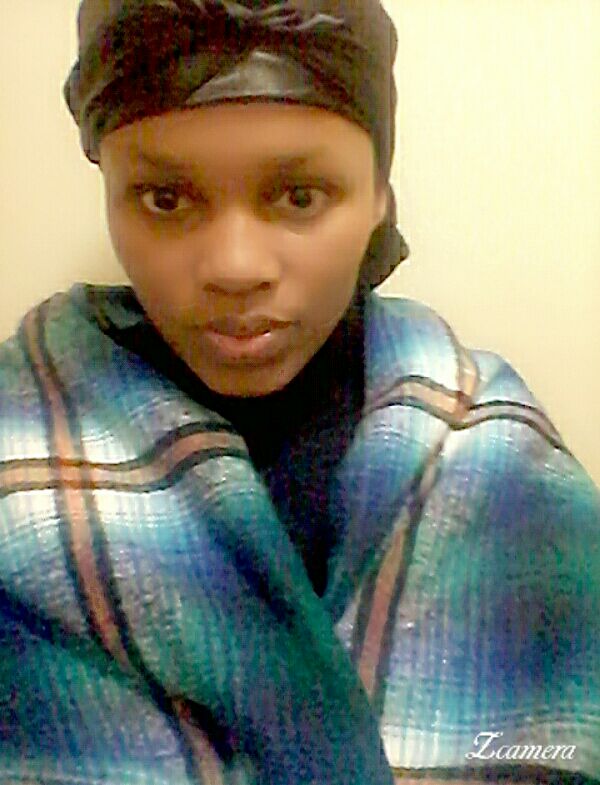
Figure 18: Ndongeni, S. (2015) Umakoti clothing.

In many other Nguni groups, dress and accessories carried a narrative or visual symbolism for the wearer; though several of these have been lost due to modernization of the world. Nonetheless symbolism of dress and accessories still play an important role within the Xhosa culture especially when it comes to a marriage and being umakoti.

One of these is the headdress which is a symbol of respect towards both elders within the marital home and one’s husband (CSIR, 2018). Within each division of the tribes, various colours, clothing and beads hold various significances and when designing my final collection this will play vital role in the formation of my pieces (Magubane, vanishing cultures of south africa, 1998).

Sunday, 1 September 2019

Reflective report

I was going through a reflective report from last year and I came across these thoughts, or this thought process I had put myself through trying to understand what was in my head. 

Monday, 22 July 2019

The Evolution of a Queen

In an earlier post I had written, I had posted about an item of jewellery worn by a Game of Thrones character (see link https://jewellersbride.blogspot.com/2019/06/daenerys-targaryen.html?m=1)
I came across this video which gives a brief flash of how this character once exchanged by her brother for personal gain, decided she would not be defeated by the life circumstances of her marriage, but instead rose to be a loved Queen.

I guess this is an example of when a person refuses to allow life to defeat them. 

Happily ever after

Cinderella 

When I embarked on the journey of creating a bridal themed collection, I was soon faced with the challenge, would I as a jeweller follow the status quo by creating jewellery which would paint a narrative identical to the one portrayed by media? Or would I create a collection of jewellery based on the narrative of millions of women and young girls who never find this Prince Charming?
The above picture is an example of what media portrays, as appealing as it may be create the Cinderella tale, I felt that there were some real stories which were being swept under the red carpet she walks on. 

Therefore with my work, I wanted to try to narrate the bridal/ umakoti narrative of those who never got to live that fairytale ending. I feel that as much as they are represented in statistics and numbers, that those were and are lives, which have stories and perspectives which need to be told. Their lives are not just more stories, but their reality.

I have therefore tried to use jewellery alongside poetry in order to capture these idea. Within a story, a movie to be specific its not just the words which express the story, but all the small pieces which inform one story, such as the lighting, the music, the props and clothing. In a similar way, the jewellery which I will be making will also rely on the colour, the textures, the words and the symbols in order to effectively portray the narratives.

Monday, 3 June 2019

Poetry meets art

I came across this video today and I thought that I should share. The poet in the video is named George, he has based this particular poem on a photograph captured by Paul Graham. What I liked about this spoken word piece is how he has not just related to the woman, but has however written as if he was the woman. This is a stance I have also tried to take with some of the poetry which will be reflective or the inspiration for my own work.


Poetry meets art: George the Poet inspired by Paul Graham

Wednesday, 8 May 2019

Interpretation


After reading the fourth paragraph, I began to ponder the approach I want to take with my work, in terms of experience and perspective. I therefore found that in my own work, I try to use my jewellery as a tool to express female content based on my own poetic interpretation so as to relate to the wearer or the subject.

Virtual gallery part 2


Still continuing with the review of the papers, I have found that narrative in contemporary art and jewellery can be closely described as work which relies on figures or designs/ representation or as work which has referenced a specific topic or reality, relying mostly on symbolism or the representation so as to produce an effect. It was however through the influence of pop art which allowed for more people to realise the ability of jewellery to possess narrative messages; and therefore becoming a tool which expresses and deals with issues.


Virtual gallery

I have been going through the Narrative papers from the virtual gallery and have decided to share some of my thoughts on what I have read:

Narrative jewellery is not only about jewellery which tells a story, but jewellery which implies a certain meaning or expression and therefore it’s about the thoughts and ideas which the creator hopes to produces for the viewer/wearer.

One jewellery designer whose work I came across that seemed to reflect this concept. She bases her narrative work historical narrative stories, where she uses “personal and vintage objects” which would hold personal significance to the wearer such as family jewellery etc. She would then use these personal treasures as a base for her designs and manufacturing development. An example of her work is the brooch pin, in which she has used old found pearl, which was inspired by old photographs.
https://narrativejewellery.tumblr.com/post/102545827883/what-is-narrative-jewellery-part-one
 

Wednesday, 15 August 2018

Rose by any other name

My next design concept was yet another poem which I was busy writing about a wife. The general idea around the poem is that like a rose would always remain a rose even if it were to have another name, a slave would also remain just that even if you have chosen to instead call her umakoti/ wife. This is my way of conversing on the sometimes abusive and destructive practices young wives are forced to suffer all in the guise of it being a right of passage or part of the native African cultures.

Figure 2: Ndongeni, S (2016). Rose set.
As I began to both writing the poem and designing of the piece of rose chain, I became to remember that in 2016 I had had a similar concept in mind. At the time I had not decided to go the narrative route but to use roses as they are one of the flowers widely associated with love and weddings, I had in fact entitled one of my blogposts with the title: ‘a rose by any other name’. This had been an intentional play on words for both my poem and my item of jewellery as that is a title of a title of a poem based on a lie said by none other than Juliet from the famous story “Romeo and Juliet.  She was trying to give forth the idea that just because the man she happened to have love was the son from a family who was in fact the enemy of her own family, would not suddenly make her love for him change. Which is what I want to convey with my use of the line, however not as the title of the poem. The picture in figure 2 is one of the designs which had included a rose or was rose inspired which I had designed in 2016, which is a pair of earrings and a pendant.
Figure 1: Ndongeni, S (2016). Rose by Another Name Series. Silver chain with roses.


I therefore decided to make a rose chain as seen in figure 2, which I was trying to use as a mouthpiece to converse the idea that even though one may take a rose and place it on a silver chain, the chain still was a chain which enslaved the wife. I had looked at several slave chain and found that they were mostly oval and this was the chain shape I had chosen to make. I had decided to solder the small roses onto the actual chain.  I still have yet to finish off the chain, because I am sill undecided as to how to finish off the piece. However I want it to have a slave chain look and feel to it.   Nonetheless I want the overall theme to display the idea that as much as it may look attract to the eye, it doesn’t change the fact that causes harm nor the fact that it there to enslave her.
Figure 3: Rose by another name series, brass and crystal beaded bridal piece.

The third development of the series was the piece seen in figure 3, where I expanded on the slavery idea by making brass neck and arm cuffs. I tried to add a bridal element to the piece by using the clear crystal beads instead if chains.  

Tuesday, 3 April 2018

In her eyes

So I have decided that her shoes just cannot seem to fit me, and I have thus concluded that for now I will capture what I see in her eyes and it appears to have helped as I seem to have found my direction towards what I know I want. I feel so passionate about this narrative I am trying to create through spoken word and jewellery, as it depicts and is an expression of voices which have long been contained. When I began the research I never contemplated this direction and interpretation of the bridal jewellery theme I had been so fixated to. It is not just about the happiness, joy of a dream realized and having one’s Cinderella; it is about pain, the tears, the betrayal and the dream stolen/ destroyed which is the reality for some women in marriage.

As much as this is not the picture portrayed about the marriage covenant, this has been and is the reality for millions of women all over the world. Maybe my narrative will not erase that reality, but it will however reflect the unspoken tears muted by cultural/traditional and religious expectations.

Walking in her shoes

I have been trying to go through the process and begin with the poetic narrative of the design process. So, I must become her, at least through words and voice I need to become her. If I am to fully remove myself from her and just walk in her shoes with the hopes to be true to her story.  My mind at this point has gone through the process of banging my head against the wall as it truly has been a while (a while being years) since I have taken the time to just dwell in my head and just write a piece. So, with a flood of ideas I want to capture and frame into a narrative which will be what I have as a finished piece of writing in my head; however, I seem not to be satisfied with what I have. Thus, the result is just puzzle pieces of ideas needing to find a match and make the sense I am trying to portray.

Development


I have been spending some time playing around and developing the research, so I have not reached the final title for my research, but have I however revaluated it to begin to reflect where my thoughts and mind on the research are at. So for now what I am working around is:

·         Challenging bridal practices and traditions which influence bridal identity through the use of various narratives.

·         Using various narratives in order to challenge past and present practices/cultural traditions in order to depict bridal identity

The appearance of an arrangement with the reality of force

It is the will of God! Your parents know best, to go against them is to go against God, your family or your culture; it’s is disobedience and rebellion. Many girls have and still fall prey to such notions and end up married to men who will be in the best interest of their families, rather than themselves. Is it truly a horrific thing, especially when your family has taken careful consideration of your wellbeing and is securing your future? Which brings up a question, is arranged marriage, truly euphuism for forced marriage?  Are discussions opposing forced marriage in the best interest of the bride or are they simply an attack of religious and cultural practices for marriage? When an arranged marriage does ceases to be arranged and has instead taken the form of a forced marriage? 
The  topic of arranged and forced marriage, although a subdivision within marriage, like child marriage is also too broad to fully cover and discuss within the limitations of a B.Tech thesis and will thus mention it briefly and introduce certain aspects of it.

The illegal bride


  • My research has lead me down many paths and dashed the bridal identity wide open, leaving so many rooms of exploration to what is a bride, who is a bride and ultimately what does it mean to be a bride? With the door wide open to the unspoken words of the bride story through history and the present, it has led me to the section of child brides. Now this on its own is a topic and theme deserving of its own profound analysis and research thesis as it is both alarming and controversial dependent on which side of the law, religious or cultural belief system you lean on. I will thus only be giving a brief summation on the subject and will not be conducting a deep analysis on the subject. I would however like to include it as part of my study by producing a poetic and jewellery depiction/caption of the subject.


Through my research I have become alarmed by the vast numbers of young girls who have been both abducted and forced into marriage; young girls of school going ages ranging from the ages of as young as 12. This just makes me question the understanding and stand point of cultures as to what marriage is and what is a bride? The reason being that, how can a girl who has just hit adolescence and barely knows who she is, a girl who is still trying to understand herself and grow into herself, be expected to not just play house, but be the woman of the house? What are the determining factors? I have been going through documentary after documentary, and was shocked by just how many women actually agree let allow defend this practice, which is actually a form of abuse. One woman, from the Eastern Cape actually stated that what the law regards to be an unlawful age to marry is not what Xhosa culture regards as unlawful. This is just one of many examples of such beliefs being part of traditional systems which broadened as far as the UK, where girls are literally kept and taken out of schools by the thousands per year by their own parents, all in the name of marriage.  All of these girls fall under the age groups of below 18 to 10 year old.

In truth, I must ask: “What is does it mean to be a bride, when you are forced to become one even as a child?”

When I became a Xhosa bride…


To describe my personal experience in five words or less, I would describe my experience nothing short of being thrown into the deep end and being expected to swim or drown. So basically when you have become a Xhosa wife, you actually are regarded as a wife from the day the Labola negotiations start, there is no specific order as some families perform this umakoti custom I am about to describe either before you are legally the wife or after.

Now this may differ from family to family, but in essence you would come with the clothes you are dressed in, you are told to take all of your clothes off and you are then dressed in brand new makoti attire which your in-laws provide you with. This whole process marks the stage where you are no longer considered a girl, but a wife; thus the taking off of the old clothes which you will no longer be allowed to wear again, (as these will be given to a female  in your in-laws, this includes everything even shoes.) You are not allowed to dress yourself, as you considered a figurative baby and are instead dressed by one of your sister in-laws; as she explains the sequence you are to follow when wearing each item of clothing.  Once she has finished dressing you up, she would then give you instruction on what you should do next and everything that would follow. To summarize, you would go into the room full with family members, who you are not allowed to look at as you must look down the whole time until you are led to where you will sit down on a straw mat. The naming and ukuyalwa begins, this is when you are given all the rules you are to follow etc.  There are many other things involved, I have just written these to give a general idea about the process.
I have included some pictures of when I was dressed and named.

I do not  have a picture of myself while sitting on the straw mat, so I have included one from the internet.
…10 Things every Makoti wanna be should know…

 .


The Xhosa bride through my life

As I have briefly mentioned in an earlier post, I have married into a Xhosa family which practices cultural traditions and this has thus put me in a position where I get to have a front row seat to what is a Xhosa bride. In my family, the traditional rules for umakoti were never really that strict as in some families; I remember my late uncle’s wife doing the chores but it was never solely her responsibility, the family all worked together, even my mom, her sisters and even my grandma at times. I never recalled a period where my aunts just sat around doing absolutely nothing and she did everything from morning to dawn. 

Then when it came to big functions in the rural areas (ezilalini), I recall a huge group of women who would pitch up wearing sheshwe print dresses, aprons, towels and a doek on their heads. These women would be in charge of all the cooking and whatever else that needed to be done for the occasion, having help for young girls when it came to distributing food. Now this was just the norm, the very older women, like in the league of my grandmother or so would normally be sitting around in some room or hut, as they had reached the Xhosa status I suppose where they had earned the right not to do work as they were no longer young makotis. There is a specific hierarchy to the whole matter I have come to find out, where the older wives have superiority over the newly married wives, regardless of age.

Ukuthwala


The practice of ukuthwala (bridal abduction), has formed part of many South African native cultural groups, and has still remained as a cultural practice in several places in the Eastern Cape. As the Eastern Cape is predominately a Xhosa populated part of the country, I will be investigating this practice through the Xhosa culture.

The practice of ukuthwala may be divided into two circumstances; in one case the girl’s family has given their consent to having their daughter abducted and in the other case there is no agreement between the two families. Nonetheless in both cases the young woman/girl has not been informed nor has her consent been given.

Through several conversations I have had with older people in the Xhosa culture, I have found that in the first instance, the groom’s family goes to ask for the girl’s hand in marriage without her knowledge and the labola negotiations are conducted and concluded. Once both families have reached an agreement, they then go on to arrange with the bride’s family on the day in which she will abducted and discuss the details of the abduction and the part the bride’s family will then play. In most cases the girl is sent somewhere where her future in-laws have laid and ambush for her and they will then proceed in kidnapping her to their home. Once they arrive at the home, she is to be locked inside a room where she will be met by the women in the groom’s family, who will then go on to inform her of what is taking place. Should she persist with resistance, male members from her own family will then be allowed to enter the room and explain to her that her family had given their consent to the marriage and that should she not agree to marry the man, show would have brought disgrace to her family, as everything had been finalized.

Whereas in the other case, the bride’s family has not been asked for permission to abduct their daughter and have done so at their own discretion. In this case, the young man along with his friends and family would then have to follow the girl in order to know her schedule. Once he has chosen the date, they would then proceed and abduct the young girl by any means possible. Like the previous case, the girl will be taken to a room and the women in the groom’s family will come in and attempt to convince her of the marriage, they will force her to undress and in some cases undress her so that she can wear bride attire suitable for a new bride. Her family would then be contacted to notify them of the marriage, the place where their daughter was now living and in order to discuss labola negotiations.

Although cases may vary, in many of these cases, especially when the girl is adamant on refusing the marriage regardless of the efforts of the family, or in some cases both families; she is then forced to spend the night with her groom; which sometimes can result in rape. This period of rape may be for one night, while in some cases be over a long period of time until she agrees to remain married. This is usually the reason why many women remained married as they believed that since they were no longer virgins no man would want to marry then anyway and they thus had no choice but to be married to him.

However rape is not always the cases with ukuthwala, in many instances the women agree to live with the men especially in cases where their own parents have given the consent for the abduction.

The other side of the sea


As stated in my previous post, I will be gathering research material regarding the subject of ukuthwala and the bridal identity from across the world borders. One of the places which has deep roots of the practice and still practice bridal abduction is Kyrgyzstan, located in Central Asia. I have been watching several documentaries on the subject so as to get a more profound understanding of this subject, here is yet another documentary on the subject.
A summarized version of how it is done in Kyrgyzstan would be: once a man has decided that he is ready to marry and has chosen his future wife, he will then inform his family and friends who would then help him kidnap the young woman. While the groom and is friends kidnap the girl, his family are busy preparing for the arrival of their new bride.  In some cases, they even go as far as to prepare food and invite guests. Once the unsuspecting bride arrives, the women in the groom’s family will then proceed in trying to convince the young lady to marry their son; there is a lot of tears and protest involved from the young lady, however this is all met with the deafened ears and force by the groom’s family. The girl’s family will then be informed of the fact that their daughter has been kidnapped for marriage and the groom’s family apologizes with many gifts.

Monday, 2 April 2018

Bridal abduction


Since bridal abduction has been and still is another form of marriage in some parts of the world, South Africa included. I have seen the importance of discussing this form of marriage as it has been and in some places still is a controversial topic.  I have found that the underlying reason behind this is that it borders on the line of what is considered a custom/ cultural practice and what is regarded as abuse/ against the law and human rights.

I have thus decided to start off with a broader view point so as to see what thread and patterns are common in  the practice that it can form part of cultures which are worlds apart. It will be important to note that bridal abduction is slightly different from forced marriage, although both in essence deny the woman or in some cases the girl the right to choose to marry. However bridal abduction/ ukutwala is far more brutal as the girl is literally abducted and has no previous knowledge she is to marry, but is suddenly kidnapped and taken home by strangers to be then told she has become someone’s wife. At this stage of the research, I have taken the stance of being “on the fence”; so as to best represent all views concerning the topics on which I will be researching. As I feel that this will not taint the information gathered, and will thus help me capture the story more holistically.


The above video, is a Special Assignment segment  of the topic of bridal abduction.

The journey thus far


When I started off with my B.Tech, I didn’t have the complete picture as to what I wanted to do exactly. I did however know that I wanted to produce a collection of bridal jewellery which was authentic and was more than just another part of bridal jewellery. As I started off with research I began to dissect the many aspect of the wedding, the bride and groom; taking a closer look at what does it mean to be a bride and the history of wedding/bridal traditions. This finally lead to a path of the many troubling sides to what some brides have and do go through, not to mention the place of the bride in history. Along with that notion which was beginning to take form in my head, towards the end of my first year of B.Tech I began to want to somehow involve my poetry in my work and instead of producing a body of work which would be focused on atheistic, I began to be more inclined in producing a body of work which was more centered on the bridal narrative.

The reasoning behind this is that so much of media and movies focus on the happily-ever after theme, which creates these false realities and expectations, about the romance, this big day which is meant to be the most important day of a woman’s life. I want my paper to be more than just an addition to the many bridal works out there which promote a dream. I want my body of work to speak and be the very voice of the reality swept under carpet until after the big day which is part of society. I want it to be both a poetic and jewellery narrative of important issues, however not discouraging the marriage covenant, but a segment of the untold and the parts involved in the bridal identity.  I want to explore the “whys”, challenge the unfair practices and just display these as an artistic expression through the mediums of poetry and jewellery.