Showing posts with label keywords. Show all posts

Monday, 14 October 2019

Contemporary jewellery

When trying to formulate the definition for what this report believes contemporary jewellery is, this paper has looked at the definition given by two influential contemporary jewellers these being:

    Bruce Metcalf
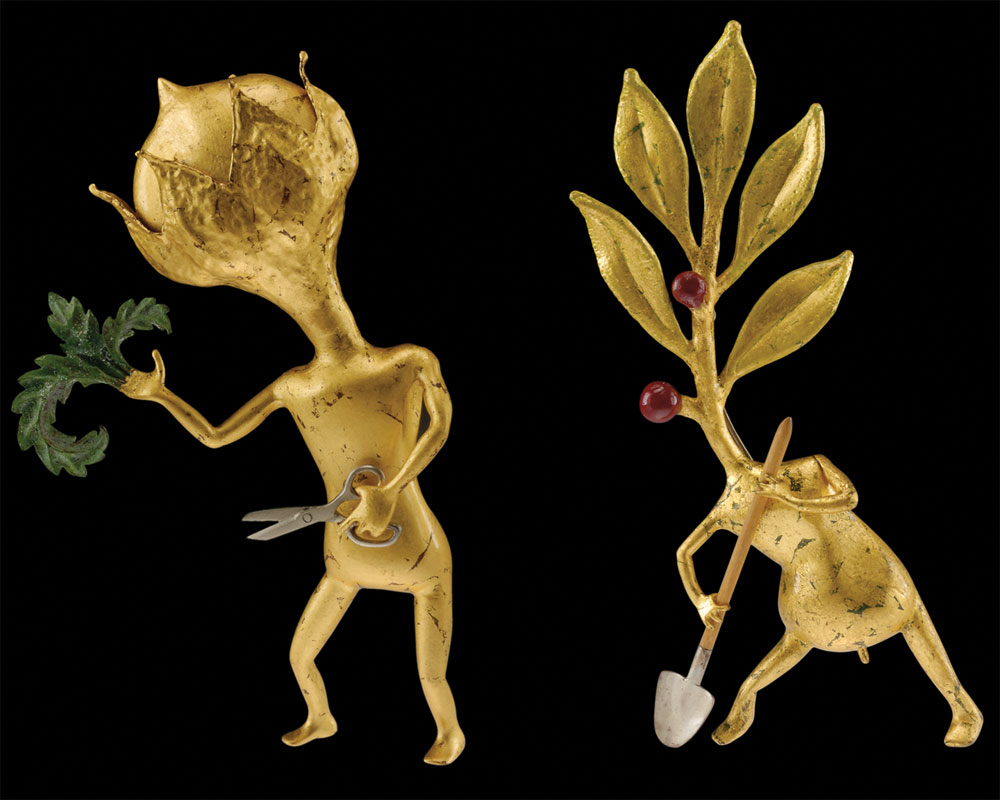
Image result for bruce metcalf virtual gallery
Figure 1: Metcalf, B  (1997). Brooch pins, maple, copper, brass, sterling silver, 23k gold leaf. [ONLINE]
According to Metcalf, there is no fixed definition for jewellery in itself as it may gravitate between the extremes of both sculptural may yet be closely related to textile (Metcalf, 1998). In his paper he also highlights the main five functions of jewellery which he uses as a guide in order to discover his definition of what is contemporary jewellery. As seen in figure 1, an item if jewellery may have sculptural features and still be considered an item of jewellery.

b.      Liesbeth den Besten
According to art historian Liesbeth den Besten, contemporary jewellery is an item of jewellery which is reflective of that specific period  which it was created in, expanding to at least a 50 year period gap (Besten, 2001).

Wednesday, 18 September 2019

Umakoti/ bride


Figure 18: Ndongeni, S. (2015) Umakoti clothing.

In many other Nguni groups, dress and accessories carried a narrative or visual symbolism for the wearer; though several of these have been lost due to modernization of the world. Nonetheless symbolism of dress and accessories still play an important role within the Xhosa culture especially when it comes to a marriage and being umakoti.

One of these is the headdress which is a symbol of respect towards both elders within the marital home and one’s husband (CSIR, 2018). Within each division of the tribes, various colours, clothing and beads hold various significances and when designing my final collection this will play vital role in the formation of my pieces (Magubane, vanishing cultures of south africa, 1998).

Monday, 2 September 2019

East London Museum

During my time in East London, had visited the East London museum so as to get somr information about the Xhosa people. I had an interesting conversation with the one of the anthropologist from the museum, which I will be continued at a later stage. 
 The above display is one of the exhibiting Xhosa beadwork. I have also included a closeup picture of the painting which was placed above the display as it shows drawings of Xhosa people wearing their jewellery.
I will be adding more pictures from tbe visit at a later post. 

Thursday, 8 August 2019

ILobola/ bride price

The practice of paying lobola or dowry is one which is regarded as an integral part of many African marriages; it is, in fact, a practice which is not limited or exclusive to African cultures but is part of other cultures in the world such as the Indian culture and the Jewish people, who refer to it as dowry  (Gullapalli, 2009) (Liebenberg,n.d.).
 
Figure 1 Tina, T. (2018) Three uncles negotiating lobola. [ONLINE] [1]
  1. Positives
The importance of the payment of the bridal price is seen as an act of respect for the bride and her family; as it is seen as a gesture of gratitude while also displaying his fidelity and commitment to his bride and also displaying good care of her by proving that he values her. Contrary to many false beliefs, the bride price is not a payment of the daughter nor is it the purchase of a bride, it is, however, a gesture which displayed the man would be capable of providing for the bride and that he and his family were people of substance (Magubane, 2001). Also, it was a security bond posted by or on behalf of the bridegroom as a pledge of good treatment; a man was not likely to abandon such a substantial investment, and in most societies, if a divorce resulted because of abuse and ill-treatment, all or most of the lobola was forfeited.
 
Since lobola is a gesture most families do not require the full payment to be made before marriage as it is believed that since no true price can be placed on their priceless daughter. A man can never fully pay lobola but is however responsible to make payments (for a lack of word) to the family for life. These payments come in the form of making sure that the needs and wants of the bride’s family are taken care of when they arise, these thus count as the bottomless lobola price the husband is to pay for the daughter he has taken as a wife (Ngema, 2013).


Although meant to be a gesture of gratitude and a symbol that the daughter will be well taken care of; like many things within society this practice has been abused and the process has been polluted by many people to satisfy their own personal desires and interests. These have been done through the demand of a bridal price which is beyond the means of what the man can afford, or in some cases families may require the man to pay an amount which is too high as the family considers their own personal needs and wants.

In other instances, the process becomes tainted as the daughter becomes a bargaining chip or even an object to be sold to the highest bidder and her family disregards what is in the best interest of their daughter to make money off her marriage. An example of such cases would be the process or the marriage which is the result of ukuthwala (bridal abduction).
Another way the best interest of the bride does not play a key factor is when the family forces her to marry for money or status rather than to marry for love. This type of marriage is then regarded as forced marriage, rather than arranged marriage.

The payment of lobola has been one of the many factors within the African native cultures which has aided in the difficulty of divorce. With a process so flawed and ungoverned by neither law nor many restrictions besides what families decide is just and fair payment, should such a practice be found to be relevant in this contemporary and liberal world we live in? It actually should still be practiced as there are several consequences that are directly linked to the refusal to partake in the practice. One of these being that the couple may not be fully received by both families if they do not choose to adhere or observe important cultural practices. The wife may be ostracized by other family members of the husband’s family and may not be considered a true makoti within the family.

Child marriage

Child marriage was and still is another marriage form within the Xhosa culture which brings about much concern. In the past and in many rural places with South Africa and the world, the girls who enter such marriages may be even as young as eight years old or even nine years old (Silva-de-Alwis, 2008). This in terms is an issue as there many disadvantages which are associated with child marriages such as miscarriages.


This marriage type caught my attention as throughout history and the modern day, large numbers of young girls are forced into entering such marriages. Regardless of child laws and children’s rights which are I place, however millions of girls still fall through the cracks and in many cases it is their own parents who push them through the cracks. (Anon., 2018) (South African Abductions: young girls forced into marriage, n.d.)

 To further tie this issue to the report is the fact that in some cases these young girls entered these marriages as a result of abduction.  Hence when the report addresses child marriages, it is referring to any marriage which has occurred involving persons or a person under the age of 18.

Figure 1 Human rights brief. #ChildNotBride protest. [ONLINE][1]


Umakoti/ bride

 I have found that there are rules to be followed and even a specific hierarchy even among the brides within the family, which is determined by many factors one of these being how long one has been married; thus giving umakoti that has been married longer superiority over a recently married umakoti., this is regardless of the wife’s age.

As part of being umakoti, you are in some ways treated as a new born, in the sense that when you become a new member of the family and are welcomed into the family, you are given a new name and brand new clothes. As you are no longer a girl but a wife, you are then given instructions by the family on how to conduct yourself within the family and depending how strict the family is, you are given instructions on how to conduct yourself outside the family, this is called ukuyala. 

Once this process has been conducted, according to tradition, you are to no longer to be referred to as your birth name, but you may however be called your clan name, and the new wife is to no longer refer to her husband by name especially in front of others, she is to call him bhuti or Tata ka so-and-so (so and so father, the name of the their first born child).  He on the other hand may call you by name; however the name his family has given you. There is so much more involved in the making of umakoti, however for purposes of this report, when I refer to umakoti unless stated, I am referring to someone who has been married for 15 years or less, as a wife who is married longer is regarded as umfazi. 

Poetry as a Narrative

All poetry is narrative as each word or line expresses a message. As defined in the beginning section of Narratives poetry, poetry uses language to express its chosen perspective of reality. Using poetry devices such as metaphor, rhyme meter, etc; the poet can transfer thought, feeling, and experience.
Traditional poems focused attention to rhyme structure, rhythm, and other poetry devices, while the more modern narrative poems tend to break those traditional rules and may even have no specific rhyme within the poem itself. However, one common reality that remains though is that it tells a story, it provides brief or intense descriptions concerning the subject matter and is ultimately more dramatized, unlike the other poetry classifications.
This report has therefor defined poetry any given emotion, thought or situation. As a painter would use their colour and art principles in order to create  a specific feeling or portrayal of a subject in order to engage with an audience, so does a poet with words. However, they would use poetic principles in order to achieve this.


Poetry

Before I discuss narrative poetry, I felt that it would be best to give my brief interpretation of what poetry is. One definition
 “A composition that conveys experiences, thoughts or feelings in a vivid and imaginative way. It is characterized by the use of literary techniques such as metaphor, rhyme or meter. “
There are various classifications find in poetry, mainly:
Narrative
Lyrical
Limerick
Free verse
Haiku
Concrete
Dramatic
Keeping the above given information, I would define poetry as an intentional arrangement of works so as depict any given emotion, thought or situation. As a painter would use their colour and art principles in order to create  a specific feeling or portrayal of a subject in order to engage with an audience, so does a poet with words. However they would use poetic principles in order to achieve this

Xhosa keepers


Figure Xhosa woman wearing a Keeper. (ONLINE)
Figure 1  Xhosa woman wearing a Keeper. (ONLINE)[1]


Figure Xhosa woman wearing a Keeper. (ONLINE)

The woman in the picture above is wearing a Xhosa traditional Keeper which depicts the stage she is now in as a Xhosa wife. The triangles symbolize an older married woman, and the fact that the woman in the Keep has no legs is an indication that the woman wearing the keeper feels that she is worn out at this stage in her life and she, therefore, will not have any use for her legs. 


Beadwork

“we will think of beadwork as a substance or form of embellishment created by the union, with or without thread, of a group of beads of any shape, size, or material. The essence of beadwork is union, and this union may take many guises, from a modest single-strand necklace to an opulent netted wall panel.” (Hector, 2005).

According to Valerie Hector, there are several design options one may adopt when dealing with beads so as to enhance your beadwork or to create new beadwork design forms. From the list she had given, I have only written and explained those which are most relevant for this report and my own work, these are as follows:

Narrative Jewellery

One of the most prominent jewellers when it comes to contemporary narrative jewellery is Professor Jack Cunningham. In addition to being a contemporary studio jeweller, he is a curator and an academic, who has made a huge contribution to the field. The picture below is part of a series by Cunningham entitled: “The Great Barrier” (Commentaire, 2013)

Figure 1 –Withycombe, D. (2010)The Great Barrier Brooch. [ONLINE}[1]

In order to depict his personal narrative, Cunningham, has chosen to use found objects. This work has been used to illustrate what narrative jewellery is, as is has been manufactured using found objects and has relied on its title to help indicate its narrative to its viewer.
According to Cunningham narrative jewellery may be described as:
 “…small objects that have the potential to speak of large issues make bold statements and question accepted values.”

When observing his piece alongside his definition, a connection may be established. Hence this report has accepted this definition as it will be using jewellery a means to address bridal umakoti issues which are prevalent within the Xhosa lives of many young girls and women.

Within the category of narrative jewellery, this report will be looking at the following types of narrative works:

                                   a.            Narrative jewellery
                         b.       Xhosa Beadwork as a narrative   


Narrative

For the purposes of this report, narrative works may be explained as translating reality into a form in which the intended target may comprehend the idea or angle the artist is illustrating or addressing with their craft. This is confirmed in the quote below written by Hazel Paul, taken from her report 
based on narrative works.

“A narrative is re-presentation of reality from a particular perspective: reality reconfigured to express meaning”  (Hazel, n.d.).

Figure 1 Andrea Previtali, Italian, ca. 1470 – 1528, The Annunciation, ca. 1520-1525, Tempera on wood panel, Gift of the Samuel H.
Kress Foundation 61.197. (ONLINE)[1]
The above picture is a narrative art work done by Andrea Previtali, it depicts the annunciation[2] of Mary, which is an important event within the Catholic Church, as it depicts the moment when the angel Gabriel was informing Mary that she would be the mother of Christ. Referencing from the narrative definition given by Paul, one would be able to observe the choice of symbols used within the work of art so as to express the painter’s narrative. The artist Previtali has given Mary and the angel halos, which is a symbol used within the Catholic circles to depict a saint. The other symbolism, which has been included is the dove, which was present at the Baptism of Jesus, this could be the painter’s way of expressing the authoritativeness of the message, as one ascending from God Himself.
 When it comes to analyzing a narrative work regardless of the art discipline, there are certain key aspects which the artist needs to keep in mind; however in the section below I will be discussing these as it pertain the relevant field of this report.
 There are many forms in which a narrative may be depicted; however this report will mainly be focusing on three forms of Narrative forms these being 
 Narrative jewellery and Poetry (Rabinowitz, J. 2005).